What is this thing?
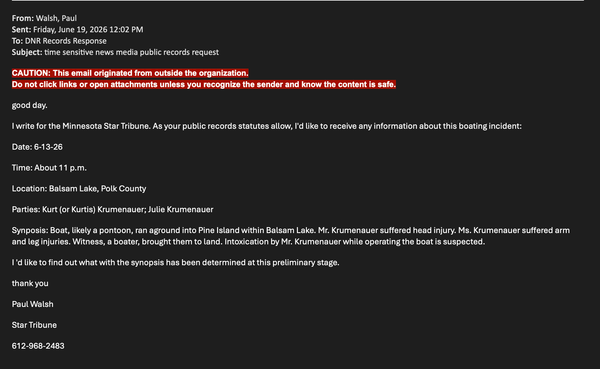
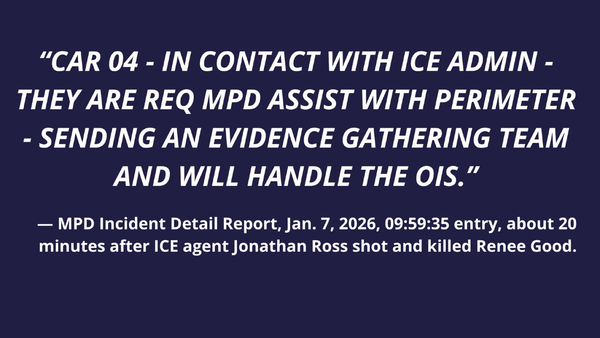
For now, this site is a container for deep-dive analysis of public records I requested from the Minneapolis Police Department from November 2025 through February 4, 2026, which include emails, incident reports, 911 transcripts, internal communications, and federal-local law-enforcement agreements.

Hi! I’m Molly Priesmeyer, a former investigative reporter and still-obsessive research nerd based in Minneapolis.
I now work as a systems-change strategist and Director of Narrative and Advocacy Strategy — which is mostly a fancier nonprofit-y way of saying I spend a lot of time researching, analyzing, synthesizing, and translating complex public policies, narratives, and systems into something people can actually understand, use, and advocate around in service of the public good.
I also watch a lot of ER lately. And sniff lilacs and peonies. Speaking of peonies, you can also find me on Bluesky as @mollypeonies.
In January and February, I submitted extensive public-records requests to the Minneapolis Police Department under the Minnesota Government Data Practices Act. My original plan was to gather documents and source material that could be shared with reporters and others tracking federal enforcement activity, emergency response, public safety, and police accountability in Minneapolis.
After reviewing thousands of pages of records, I identified several issues that appeared significant and warranted deeper reporting and public attention. When local reporters did not respond on some of those concerns, I decided to publish documents and analysis here, so Minneapolis residents can see the records, understand the context, evaluate the questions they raise, and demand the transparency and accountability they are owed from Mayor Frey’s office and MPD leadership.
The records I have received so far cover the period from December 1, 2025, through February 4, 2026. They include emails, incident reports, 911 transcripts, call-for-service data, internal communications, emergency-response records, staffing and deployment materials, outside-agency communications, and federal-local law-enforcement agreements.
Together, they offer a partial but important view into how Mayor Jacob Frey and MPD leadership governed local police power as federal enforcement activity escalated across Minneapolis: How they planned, what they prioritized, how they made command decisions, and what protections they did—or did not—put in place for the community they serve.
This project focuses on what those records reveal about city and MPD leadership, federal enforcement activity, emergency response, public safety, transparency, oversight, and the gap between official messaging and what happened on the ground.
So what does that mean?
Over the coming days and weeks, I’ll be publishing document-based reporting and analysis drawn from these public records.
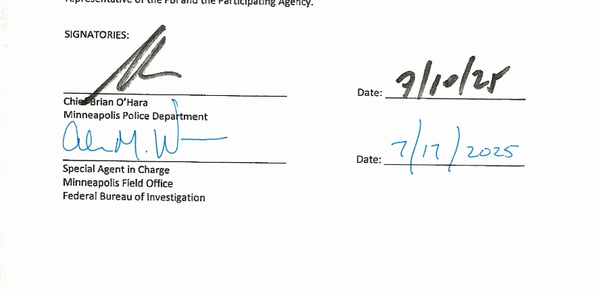
I’m starting with the 2025 federal task-force agreements because they show how the structure was built—and how decisions made without clear local command, public limits, or enforceable safeguards could expose Minneapolis residents to harm. These agreements made local police labor, records, intelligence, evidence, overtime capacity, and command authority available to federalized law-enforcement systems at a moment of escalating federal power.
I am doing this work as one person, without an editor, newsroom support, or research staff helping sort through thousands of pages of records. I will do my best to be careful, clear, and transparent about what the documents show, what they do not show, and what still needs to be verified.
I also ask for some grace as this work unfolds. These public records are messy, incomplete, and difficult to piece together. I may make mistakes, as humans are wont to do. "If you see something, say something!"
If you spot a significant error, please message me and let me know! Accountability to truth, integrity, and each other is part of the collective work—and part of holding public systems to the same standard.
Want to help with deeper-dive data analysis of these records? Message me! I can point people toward specific documents, questions, spreadsheets, timelines, and patterns that need closer review.
The more eyes reviewing these documents, the better!
Full disclosure: I am admittedly not a great manager of people or learning processes right now, because work and life and dogs and bikes and blooming flowers are pulling me in approximately 47 directions. But if you are comfortable digging independently, checking details, building timelines, or helping make messy public records more understandable, please connect!
This may stay focused on this one records project. Or it may become a broader space for analyzing public data, public systems, power, and the records that reveal how influence moves through public policies and institutions.
Part of me wants this to become a place that makes more of my work public while also pushing me to deepen it. The research, analysis, data review, document tracing, and synthesis at the center of my policy, advocacy, and narrative-strategy work often happen in smaller circles. Bringing more of that work into public view feels like a way to sharpen the analysis, make the process more accountable, and make it more useful to people trying to understand how public power operates, challenge dominant systems and narratives, and demand accountability and transparency from public institutions.
But I also have AuDHD and am fully embracing the idea that my hyper-fixation doesn't always have to be heavy. It can be just, you know, sniffing flowers all afternoon.
Either way, this is a place for slower, document-based reporting: what the records show, what they do not show, what still needs to be verified, and what questions public officials still need to answer.
I hope to see you in Minneapolis. I will be the one with my face in flowers.
"Thanks for playing!"